Srila Prabhupada Procession in Vrindavan

Every year the day before Srila Prabhupada's Disappearance he is taken for Saptadevalaya Darshan.


Inaugurating the new Prabhupada Vani Bookstall in the Samadhi Museum!


Inaugurating the new Prabhupada Vani Bookstall in the Samadhi Museum!


Passing New Madan Mohan Mandir


Passing Old Madan Mohan Mandir


Passing Advaita Vat


Sri Sri Radharaman Ji


Srila Bhaktisiddhanta Museum Inauguration at Vrindavan Dham

On the 9th of October it was held the inauguration of Srila Bhaktisiddhanta's Museum in Sri Vrindavan Dham, at the Sri Radha Gokulananda Temple.
Sannyasis and devotees from different parts of the world attended to the event. Srila B.A. Paramadvaiti Maharaja and Shrivatsa Goswami were present and Goswamiji gave a beautiful speech about the glories of Srila Bhaktisiddhanta Sarasvati Thakur Prabhupad, the World Vaishnava Association - Vishva Vaishnava Raj Sabha, and this exhibition.
A beautiful reception was prepared for the visitors and Maha prasada was distribuited at the end.

We kindly invite your parikrama group to visit the exhibition during this month of Kartik. The museum will be open everyday until the 19th of October, 2014.

We are also very happy to announce that a permanent exhibition is being planned to will be installed at Keshi Ghat. Soon we will bring you more informations.


Sri Shrivatsa Goswamiji and Sri B.A. Paramadvaiti Swami


By the grace of Sri Sri Radha Gokulananda the Srila Bhaktisiddhanta Museum in being held in Sri Vrindavan Dham.


Source vinacc.blogspot.in

All colours drawn to the festival of lights

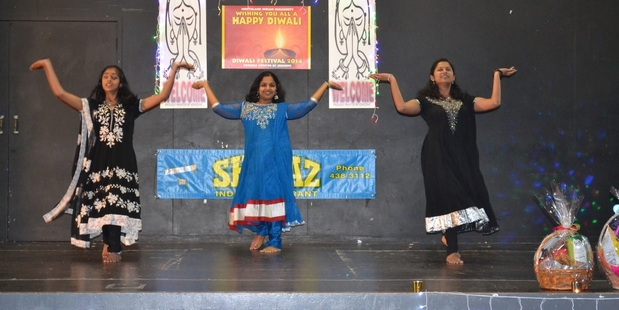
Part of the entertainment at Diwali celebration in Whangarei on Saturday. 

A bumper turnout at Whangarei's Diwali celebration was arguably the biggest crowd drawn at the Hindu festival of lights over the years.

Close to 400 people attended the event at Whangarei Intermediate School on Saturday for an evening of entertainment and vegetarian food provided by Hare Krishna - all for only $5 per head. All proceeds went to the Hare Krishna Food for Life programme that provides 1000 free school lunches at three Whangarei schools.

Diwali Fest, organised by the Northland Indian community, started with a prayer by Food for Life founder Buddhi Wilcox before Whangarei MP Shane Reti was invited to speak.

South Indian and Bollywood dances formed part of the entertainment performed by primary and secondary students, as well as women.

A punjabi song and dance was also thrown into the mix and everyone irrespective of ethnicity or religious beliefs was invited to join the fray.

An organiser, Rajesh Mistry, paid tribute to his friends and everyone who helped make the event a huge success.

"The feedback we got was that everybody really enjoyed the entertainment and food provided by Hare Krishna and I think the crowd was the biggest we've ever had."

He said some people came in after ticket sales stopped but there was ample space for everyone to enjoy the evening.

"Thanks to everyone for taking part. Your participation added colour to the occasion," he said.

Deepawali, or Diwali, is also known as "the festival of lights", because on this day, people illuminate their homes and premises with colourful lights.


Source nzherald.co.nz

Preaching at big Holi Festival in Sao Paulo, Brazil

Sripad Chandramukha Swami, ISKCON, was invited to make a musical presentation at the Holi Festival in Sao Paulo, Brazil. Thousands of people sang the Holy Names of the Lord and attended the event that took place at the biggest park of the city, the Ibirapuera Park.


Source facebook.com/cms108

‘Govardan puja’ performed

Devotees looking at the replica of the Govardhan Hill in Visakhapatnam on Friday. Photo: C.V. Subrahmanyam


With the city limping back to normal in the aftermath of cyclone Hudhud, the Govardhan puja, organised by Hare Krishna Movement at TTD Kalyanamandapam on Friday, saw scores of devotees making a beeline for the venue to offer prayers and be a part of the festivities.

A replica of the Govardhan Hill made of 300 kg of sweets was the main attraction. Several families turned up at the venue to see the replica. Made of sweet ‘bundi’, ‘ragi laddu’, ‘ragi janthikalu’, ‘kaja’, ‘Mysore pak’, ‘chakodies’, ‘coconut laddu’, ‘Sampangi flowers’, ‘jaggery arisalu’, ‘moong dal’ and other products, the replica of the Hill depicted the story of Lord Krishna when he lifted the Govardhan Hill to save His devotees from the wrath of Lord Indra.

The association has been organising the Govardhan puja for the past five years. “It is a festival which is held in commemoration of the day on which Lord Krishna performed the great feat,” said Niskin Chana Bhakta Dasa, president of Hare Krishna Movement. Along with ‘annakota varieties’ of items made of milk like ‘rasgulla’, ‘gulab jamun’, ‘sandesh’, ‘paneer’, ‘doodhpeda’ also will be offered to Lord Krishna.

As part of the celebrations, multiple traditional ghee lamps were lit and dinner Prasadam was distributed. ‘Go Puja’ was also performed on the occasion.


Source thehindu.com


The Appearance of Srila Bhakti Raksak Sridhar Dev Goswami

17 October 2014

Śrīla Bhakti Sundar Govinda Dev-Goswāmī Mahārāj’s poem describing the descending grace of Śrī Guru and Śri Gaurāṅga.


Om Aṣṭottara-śata-śrī Paramahaṁsa Parivrājakāchārya-varya
Śrī Śrīmad Bhakti Rakṣak Śrīdhar Dev-Goswāmī Viṣṇupādera
Ṣaṭ-ṣaṣṭitama Śubha-prakaṭa-vāsare

Śrī Guru-praśasti

Praise for Śrī Guru


on the 66th anniversary of the appearance day of
Om Aṣṭottara-śata-śrī Paramahaṁsa Parivrājāchārya-varya
Śrī Śrīmad Bhakti Rakṣak Śrīdhar Dev-Goswāmī Viṣṇupād

by

Śrīla Bhakti Sundar Govinda Dev-Goswāmī Mahārāj


Published in the pen name of Śrī Kṛṣṇamayī Devī
in Śrī Gauḍīya Darśan, Volume 6, Issue 3,
on Thursday 13 October 1960.

veda-tantra-purāṇādi-śāstra mahājana
yei avichintya-rasa kare anveṣaṇa
sei rasa mūrtimāna govinda-sundara
gītā-bhāgavatādite vyakta charāchara [1]

The embodiment of the inconceivable rasa that the great souls and the scriptures—the Vedas, Tantras, Purāṇas, and so on—search for, Śrī Govindasundar, has been revealed in the world by Śrī Gītā, Śrīmad Bhāgavatam, and other scriptures.

sei rasa-rāja mūrti ātma-vitaraṇe
nija nitya-śakti dvāre vyakta āsvādane
śrī-rādhā-govinda-rūpe tāhāte prakāśa
prema-bhakti dvāre labhya apūrva vilāsa [2]

This embodiment of the highest rasa is manifest by His own eternal energy to distribute and taste Himself. When He is manifest in the form of Śrī Śrī Rādhā-Govinda, His unprecendented Pastimes are attained by loving devotion.

sei avichintya veda-gopya mahārasa
āpanāre luṭāite kariyā mānasa
śrī-rādhā-govinda du̐he eka-mūrti dhari’
śrī-gaura-sundara-rūpe apūrva mādhurī [3]

When They desire to personally distribute the inconceivable supreme rasa, which is hidden by the Vedas, Śrī Śrī Rādhā-Govinda assume one form and become unprecedentedly beautiful as Śrī Gaurasundar.

ei navadvīpa jñāna-pīṭha mahādhāma
jñāna-śirobhāge śobhe kṛṣṇa-prema-nāma
ānande unmāda kara kṛṣṇa-saṅkīrtana
ei saba saṅge mahāprabhura āgamana [4]

Nabadwīp, the seat of knowledge, is the supreme abode. There, Kṛṣṇa’s Name and divine love for Kṛṣṇa shine atop the head of knowledge, and, mad with joy, Śrī Śrī Rādhā-Govinda chant the Name of Kṛṣṇa. All of this came with the appearance of Śrīman Mahāprabhu.

āpana parama prema-sudhāra bhāṇḍāra
ujāriyā āsvādaya kariyā huṅkāra
hā̐se kā̐de nāche gāya unmāda prāya
vilāiyā prema-dhana chāridike dhāya [5]

Roaring, Śrīman Mahāprabhu empties the storehouse of the nectar of His own supreme divine love and relishes it. As though mad, He laughs, cries, dances, sings, and runs in all directions distributing the wealth of divine love.

āchāṇḍāle dilā dāna devera durlabha
paśu-pakṣī tṛṇa gulme se prema-sulabha
abhāgā vañchita hala hena avatāre
ahetuka dayā-sindhu sahibāre nāre [6]

He gives outcasts a gift that is difficult for the gods to attain. He makes divine love easily attainable to even animals, birds, grass, and shrubs. The unfortunate were deceived during His descent, but He, as an ocean of unconditional mercy, cannot tolerate this.

dike dike kāle kāle āpana vaibhava
vistāriyā vitarichhe kṛṣṇa-premāsava
adyāpio sei līlā kare gorā-rāya
bhāgyavāna jana luṭe se pada-dhulāya [7]

So, from place to place and time to time, He sends His personal expansions and distributes the liquer of divine love for Kṛṣṇa. Still today, Śrī Gorā Rāya performs such Pastimes, and fortunate souls roll in the dust of His feet.

guru-rūpe gaura-kṛṣṇa śraddhāñjana-mākhā
hṛdaya-nayane māyā bhedi’ dena dekhā
nitya līlāmaya-mūrti rasera vilāsa
śuddha-sattve premamaya chetane prakāśa [8]

In the form of Śrī Guru, Gaura Kṛṣṇa pierces through the illusory environment and reveals Himself to eyes and hearts that are anointed with the collyrium of faith. His eternal, playful form and His Pastimes of tasting rasa manifest within pure hearts—within consciousness that is filled with divine love.

“yathā deve tathā gurau”, “guru-devatātmā”
“gurv-ātma-daivata” śāstra, anye “nāyamātmā”
kṛṣṇa guru e vijñāne avamati hale
divye martya-buddhi nīcha-asuyāra phale [9]

The scriptures say: “As you serve the Lord, so you should serve Śrī Guru (Śu: 6.23)”, “Śrī Guru is your Lord and beloved (SB: 11.2.37)” Śrī Guru is your beloved and Lord (SB: 11.3.22)”, and “The Supreme Soul is not attained by reasoning, intelligence, or extensive learning; He is attained by one whom He chooses; He reveals His form only to them (Ku: 1.2.23)”. If we disregard this conception of Kṛṣṇa and Guru, then, as a result of pettiness and envy, we think the divine (Śrī Guru) to be mortal.

“guru kṛṣṇa-rūpa hana śāstrera pramāṇe
guru-rūpe kṛṣṇa kṛpā kare bhakta-jane”
sad-guru lakṣaṇe yei tattva vibhūṣita
tattvābhinna sei deha kṛṣṇa-vikrīḍita [10]

“The scriptures confirm that Guru is a form of Kṛṣṇa. In the form of Guru, Kṛṣṇa bestows His mercy upon the devotees (Cc: Ādi, 1.45).” One who is in truth decorated with the characteristics of a genuine Guru is nondifferent from the Truth, and Kṛṣṇa performs Pastimes in their body.

bāhya dṛṣṭye sad-gurura viṣaya grahaṇa
kṛṣṇārthe cheṣṭita chitte kṛṣṇe nivedana
goloka bhūloka guru setura svarūpa
nīcha-jane uttolana-mūrti aparūpa [11]

According to external vision, a genuine Guru engages in material affairs, but at heart Śrī Guru acts only for Kṛṣṇa’s sake and offers everything to Kṛṣṇa. Śrī Guru is the bridge from the earth to the Lord’s abode. He is the miraculous embodiment of the deliverance of the fallen souls.

brahmāṇḍa bhramite kona sukṛti sampade
āmā āni’ dila kona gaura-jana pade
gaura-kṛṣṇa-gāthā śuni’ juḍāila prāṇa
se gāthā-tātparye chitta hala āguyāna [12]

While wandering throughout the universe, some good fortune brought me to the feet of a devotee of Śrī Gaura. Hearing the glories of Gaura Kṛṣṇa from them soothed my heart, and my heart was moved by the purport of those glories.

roge bhoge śoke tāpe jaḍa-jaḍa mana
achintya śrī-kṛṣṇa-līlāya pela āsvādana
guru-kṛpā-bale āgusari dhīre dhīre
bahu bādhā māyādevī hāne mora śire [13]

Although it was worn and torn by disease, suffering, lamentation, and misery, my heart got a taste of Śrī Kṛṣṇa’s inconceivable Pastimes. Now, I progress gradually by Śrī Guru’s mercy, but Māyā Devī hurls many obstacles at my head.

āpāta darśane tāhā baḍa-i duḥsaha
prasārita dṛṣṭye kintu maṅgala vigraha
māyāra bandhana saba kramaśaḥ ṭuṭila
ekānta śrī-kṛṣṇa-sevāra suyoga karila [14]

At first sight, these obstacles are extremely difficult to bear, but from an expanded angle of vision, they are forms of good fortune. Gradually, all of Māyā’s snares break apart, and ultimately they give me opportunities to serve Śrī Kṛṣṇa.

ye guru-kṛpāya nava jīvana sandhana
svataḥ-siddha ātma-jñāne praphullita prāṇa
patita-pāvana-pada-gaurāṅga-bharasā
śrī-rādhā-govinda-līlā-sudhā-lābha-āśā [15]

The Guru by whose mercy new life is attained, by whose mercy the heart blooms with self-manifest knowledge of the self, by whose mercy faith in the feet of the saviour of the fallen, Śrī Gaurāṅga, is attained, by whose mercy the hope of tasting the nectar of Śrī Śrī Rādhā-Govinda’s Pastimes is attained …

ye guru-kṛpāya ati kāṅgāla adhama
brahmādi durlabha labhe kṛṣṇa-prema-dhana
se guru-charaṇa-sparśa pāila avanī
kārtikī navamī dine sādhu-mukhe śuni [16]

The Guru by whose mercy very poor and fallen souls attain the wealth of divine love for Kṛṣṇa, which is difficult to attain even for Brahmā and the other gods—I hear from the mouths of the sādhus that the earth received the touch of this Guru’s feet on the ninth day of the month of Kārtik.

aṣṭa-daśa-śata sapta-daśa śakābdāte
saurāśvine śani-bāra ṣaḍ-viṁśa dinete
gauṇachāndra dāmodara kṛṣṇa-navamīte
puṣyā-yoge madhya-rātre udaya mahīte [17]

In 1817 of the Śaka era, on Saturday the 26th day of the solar month of Ashvin, the ninth day of the dark fortnight in the lunar month of Dāmodar calculated from the first day of the waning moon, in the middle of the night during conjunction with the Puṣyā star, he appeared on the earth (on 12 October 1895).

sei śubha-varṣa māsa pakṣa tithi bāra
rajanī nakṣatra kṣaṇa vandi bāra bāra
āji ei śubha-dine mahājana mate
sei-kṣaṇa avatīrṇa hala avanīte [18]

I offer my obeisance to this auspicious year, month, fortnight, lunar day, solar day, night, star, and moment again and again. According to the conception of the great souls, this moment occurred on the earth today, on this auspicious day.

bahu bhāgyavāna mili’ ei śubha-kṣaṇe
pūjichhe pavitra chitte śrī-guru-charaṇe
tā̐dera paśchāte thāki’ pūji ai pada
jīvane maraṇe hoka e mora sampada [19]

Gathering at this auspicious moment, many fortunate souls are worshipping the feet of Śrī Guru with pure hearts. Remaining behind them, I also worship his feet. In life and in death, let his feet be my wealth.

ai divya dīrgha deha divya avayava
divya-jñāna-dīpta netra divya anubhava
divya bhāṣā divya-bhāva divya-jyotirmaya
divya-dayāmaya-mūrti chitte nitya raya [20]

His lofty divine form, his divine limbs, his eyes illumined with divine knowledge, his divine perception, his divine language, his divine mood, his divine lustre, and his merciful divine figure remain in my heart forever.

gambhīra pratibhāmaya sarala udāra
jaḍa-jñāna-giri-vajra divya dīkṣādhāra
svajane suśīla snigdha, durjane durjaya
guru-gaurānuga mūrti sadā chitte raya [21]

Grave, brilliant, sincere, and magnanimous, a thunderbolt atop the mountain of mundane knowledge, a conduit for divine revelation, cordial and affectionate to the good and unconquerable by the bad, Śrī Guru’s form as the follower of Śrī Gaura always remains in my heart.

gauḍīya-āchārya-goṣṭhī-gaurava-bhājana
gauḍīya-siddhānta-maṇi kaṇṭha-vibhūṣaṇa
sarva daraśana-tattva yā̐hāra vichāre
avichintya-bhedābheda sāmañjasya dhare [22]

He is revered in the assembly of Gauḍīya Āchāryas, and the jewel-like precepts given by the Gauḍīya school are the bright ornaments around his neck. In his conception are the truths within all worldviews, and he harmonises everything with the axiom of inconceivable difference and nondifference.

gaura-sarasvatī-sphūrta siddhāntera khani
āviṣkṛta yā̐ra vākye artha chintāmaṇi
eka-tattva varṇanete nitya-nava-bhāva
susaṅgati, sāmañjasya, e saba prabhāva [23]

He is a mine of the precepts revealed by Śrī Gaura, and the wish-fulfilling jewels of the meanings of these precepts are discovered by his words. He feels ever-new joy in describing the Absolute, and his strengths are adjustment and harmony.

sakala satīrtha-varga sabe eka-mate
śrī-guru-siddhānta-dhārā dekhena yā̐hāte
tulasī-mālikā haste śrī-nāma-grahaṇa
dekhi’ yā̐ra tā̐hādera ‘prabhu’ uddīpana [24]

Unanimously, all his godbrothers see within him revelation of the precepts taught by their Guru. Seeing him chant the Holy Name with tulasī beads in his hand, they are reminded of Śrīla Prabhupād (Śrīla Bhakti Siddhānta Saraswatī Ṭhākur).

“śrī-nātha jānakī-nātha yadyapi abheda
tathāpi sarvasva mora rāmachandra-pada”
ei hanumat vākya mastakete dhari’
jīvane maraṇe chāi ai pada-tari [25]

“Although Rāmachandra is nondifferent from Nārāyaṇ, the feet of Rāmachandra are everything to me.” Holding this statement of Hanumān on my head, in life and in death, I desire to be in the boat of his feet.

“rādhā-bhajane yadi mati nāhi bhela
kṛṣṇa-bhajane tava akāraṇe gela”
mahājana śikṣā śire kariyā dhāraṇa
śrī-guru-charaṇa-sevā-rata rahu mana [26]

“If you do not aspire to serve Rādhā, then your service to Kṛṣṇa goes for nothing.” Holding this teaching of the great souls on my head, I pray, “May my heart always remain engaged in the service of the feet of Śrī Guru.”

References

yasya deve parā bhaktir yathā deve tathā gurau
tasyaite kathitā hy arthāḥ prakāśante mahātmanaḥ
(Śvetāśvatara-upaniṣad: 6.23)

“The meaning of the scriptures is revealed to the great soul who has pure devotion to the Lord, and so also to Śrī Guru.”

bhayaṁ dvitīyābhiniveśataḥ syād
īśād apetasya viparyayo ’smṛtiḥ
tan-māyayāto budha ābhajet taṁ
bhaktyaikayeṣaṁ guru-devatātmā
(Śrīmad Bhāgavatam: 11.2.37)

“Those who turn away from the Lord, forget their true self by the influence of the Lord’s illusion, consider themself to be the opposite of their true self, and become intent upon selfish enjoyment become stricken with fear. Therefore, the wise should serve the Lord with unalloyed devotion, considering Śrī Guru to be their Lord and beloved.”

tatra bhāgavatān dharmān śikṣed gurv-ātma-daivataḥ
amāyayānuvṛttyā yais tuṣyed ātmātma-do hariḥ
(SB: 11.3.22)

“Considering Śrī Guru to be one’s beloved and Lord, one should sincerely and submissively learn from him the dharma by which Śrī Hari, He who gives Himself (to His devotee), is satisfied.”

nāyamātmā pravachanena labhyo
na medhayā na bahunā śrutena
yam evaiṣa vṛṇute tena labhyaḥ
tasyaiṣa ātmā vivṛṇute tanūṁ svām
(Kaṭha-upaniṣad: 1.2.23)

“The Supreme Soul is not attained by reasoning, intelligence, or extensive learning. He is attained by one whom He chooses. He reveals His form to them.”

śrīnāthe jānakīnāthe chābhedaḥ paramātmani
tathāpi mama sarvasvaṁ rāmaḥ kamala-lochanaḥ
(Prema-bhakti-chandrikā: 29)

“Nārāyaṇ, Rāmāchandra, and the Paramātmā are all nondifferent. Still, lotus-eyed Rāma is everything to me.”

rādhā-bhajane yadi mati nāhi bhela
kṛṣṇa-bhajane tava akāraṇe gela
(Gītāvalī: Rādhāṣṭakam, 8.1)

“If you do not aspire to serve Rādhā, then your service to Kṛṣṇa goes for nothing.”


Source gaudiyadarshan.com

Tulsi Gabbard’s Diwali Greetings, 2014


Widows in Vrindavan celebrate Diwali

Widows in Vrindavan celebrate Diwali, Science , Aninews


Widows, who have been abandoned by their families, lit earthen oil lamps and offered prayers on the banks of River Yamuna as part of Diwali celebrations in Vrindavan in Uttar Pradesh. Hundreds of the widows who live in various ashrams run by the Sulabh International participated in the celebrations for the first time this year. Diwali, the annual festival of lights will be celebrated across the country on October 23. On being asked whether they would celebrate Diwali with their families, Bijali Das, who has three children but has lived in Vrindavan for several years, said that it did not matter to her since she had devoted 3 her life to god.

Vedic rock music, drama mark ISKCON Yuva Mahotsav

PATNA: Youth forum of International Society for Krishna Consciousness (ISKCON) organized a daylong 'Maha Umang Yuva Mahotsav' at the S K Memorial Hall on Sunday. It was a comprehensive package comprising drama, Vedic rock music and didactic speech.

In his discourse on 'Burning the Ravana within', Sundar Gopal Das from ISKCON, Delhi, told the youth how to improve their character through Vedic ways. A drama depicting the dialogue between Lord Krishna and a youth 'Pratap' was performed by Ishawar Nam Das and Adiyogi Das.

Das, a gold medallist IITian from Buxar, Bihar, who refused a high salaried job to join ISKCON, said the youths must imbibe their own culture and Vedic scriptures besides shunning the evils that include alcohol and drugs. Safeguarding the character and proper management of lifestyle are the two biggest issues facing the Indian youths, he said and added that ISKCON, in its bid to help the students overcome these two impediments and holds weekly sessions at several premier educational institutions, including the IIT and NIT here. Holding that the youth are the future of the country, he said ISKCON gives the students a platform where they can discuss their problems and get solutions for most of them.

In the rock show, artistes of 'Gaur Vani' band from Mauritius sung songs dedicated to Lord Krishna. Youths and devotees enjoyed the music and also danced with full energy. The audience, most of them college-goers, jumped out of their seats when the band leader chanted 'Hari Bol'.

Spokesperson of Bihar unit of ISKCON, Nand Gopal Das, said a similar programme will be held on the MIT campus at Muzaffarpur on October 21.


Source indiatimes.com

Appearance of Sri Radha Kunda

By Srila B.V. Narayana Swami, originally published at Pure Bhakti.


Sri Radha-kunda is within Bahulavana, and for this reason there is a custom to take bath in Sri Radha-kunda on the day of Bahulastami. A huge assembly of people take bath in Sri Radha-kunda on that day.

The Padma Purana states:

“Among all the gopis, Srimati Radhaji is most dear to Sri Krishna, being his principal prana vallabha. Similarly, Radhaji’s dear kunda is also very dear to him.”

The Varaha Purana declares:

“O Sri Radha-kunda! O Sri Krishna Kunda! You destroy all sins and award one-pointed prema. I bow down to you again and again.”

The Puranas are filled with innumerable descriptions of the glories of these two kundas.

In Vraja-vilasa-stava (text 53), Srila Raghunatha dasa Goswami prays:

“Not even Sri Vrindavana, which is supremely delightful because of places like the rasa filled rasa-sthali, or Sriman Govardhana, which is the arena of the nectarean rasa where the most confidential amorous pastimes (keli-krida) of the Divine Couple take place, are equal to even a shadow of a particle of the glories of Sri Radha-kunda, what to speak of other pastime-places within Vraja Mandala. I take shelter of this Sri Radha-kunda, which is more dear to Sri Mukunda than his own life.”

Sri Radha-kunda lies in a village named Arita Gaon, about three miles north-east of Govardhana and fourteen miles from Mathura and Vrindavana. Aristasura was a servant of Kamsa who assumed the form of a bull and attacked Krishna with the aim of killing him. However, Krishna killed him instead at this place.

At Sri Radha-kunda, Sri Radha-Krishna Yugala perform their midday lila-vilasa. Here they perform a variety of amorous pastimes freely and without any obstruction. This is not possible anywhere else. Therefore, Radha-kunda is considered to be the topmost place of bhajana, superior even to Nandagram, Varsana, Vrindavana and Govardhana. This most confidential place, surcharged with paramount bhavas, was revealed by Sri Caitanya Mahaprabhu himself, who is endowed with the bhava (sentiment) and kanti (luster) of Sri Radha. Previously, Sri Madhavendra Puri, Sri Lokanatha Goswami and Sri Bhugarbha Goswami also came to Vraja, where they revealed various pastime-places of Krishna; but they did not reveal this confidential place, which was manifested by Sri Gaurasundara himself, who is Sri Radha and Krishna combined.

Sri Krishna killed Aristasura during the day. That same night, he met with his beloved Sri Radhika and the other sakhis here. Sri Krishna was very eager to embrace Srimati Radhika, but as soon as he reached out towards her, she stepped back. Jokingly, she said, “Today, you have killed a bull, which belongs to the cow family. You have therefore committed the sin of killing a cow. Please don’t touch my pure body.”

Krishna smilingly answered, “Priyatame! It was a demon that I killed, who had deceitfully assumed the form of a bull, how can sin even touch me?”

Srimatiji insisted, “Whatever he was, he had assumed the form of a bull when you killed him. Hence, the sin of killing a cow has definitely touched you.” The sakhis supported Her statements.

Sri Krishna asked how he could atone for this sin. Smilingly, Srimatiji answered, “The only atonement is to take bath in all the tirthas of the entire Earth planet.” Hearing this, Sri Krishna created an extensive kunda simply by striking his heel on the ground. He then summoned all the tirthas of the entire planet to it. Uncountable tirthas immediately came before Krishna in their personified forms. Krishna asked them to enter the kunda in the form of water. In a moment, the kunda filled with pure, sacred water. Sri Krishna took bath in that kunda and again tried to touch Srimatiji. But Srimati Radhika now wanted to manifest a kunda full of water that was larger and more exquisite than Krishna’s, in response to her priyatama‘s bragging. She and her sakhis therefore stubbornly dug out a very attractive kunda nearby with their bracelets. However, not so much as a drop of water appeared in it. Krishna joked that they could take water from his kunda, but Srimatiji along with her innumerable sakhis prepared themselves to bring water from Manasi Ganga in clay pots. Sri Krishna signaled to the tirthas that they should insist that Srimatiji and her sakhis fill up their kunda by taking water from his kunda. The tirthas personified pleased Srimati Radhika by offering her and the sakhis many prayers. Srimati Radhika then gave them permission to enter her kunda. Immediately, the current of water that had flowed into Krishna-kunda also filled Radha-kunda. With great pleasure, Sri Krishna bathed and performed watersports (jal-vihara) with Srimati Radhika and the sakhis in this dear kunda.

These two kundas manifested at midnight on Krsnastami (the eighth day of the dark moon) in the month of Kartika. Hundreds and thousands of people therefore bathe here at midnight on this day known as Bahulastami.

The Padma Purana states:

“Radiantly beautiful Sri Radha-kunda is situated at the foot of Govardhana Hill. Faithful persons who bathe here on Krsnastami in the Kartika month receive prema-bhakti filled with the seva of Sri Radha-Kunjabihari Sri Hari.”

The Padma Purana also states:

“On the day of Dipavali in the month of Kartika, the ekantika (one-pointed) bhaktas of Sri Radha-Krishna can see the entire universe and the complete Vraja Mandala in Sri Radha-kunda.”

Six qualities that enhance Bhakti

By Srila Bhaktivinoda Thakur


Six qualities that enhance Bhakti
Sanga-tyaga


Even if they are materialists, this type of engagement is not considered association. But if they are pure devotees, then such activities are performed out of love. When acts are performed out of love, then it is association. Therefore giving charity to pure Vaishnavas and accepting items or wealth from them becomes sat-sanga. Giving charity to a materialist or accepting charity from one, if done out of love, becomes asat-sanga.

When a materialist approaches you, whatever is required to be done should be done only out of duty. One should not speak confidentially with a materialist. Generally there is some love involved in confidential speaking, therefore it is association. While meeting a materialistic friend, one should speak only what is extremely necessary. At that time it is better not to exhibit heartfelt love. But if that friend is a proper Vaisnava, then one should accept his association by speaking to him with love. This type of behavior with relatives and friends creates no hostility. There is no association in ordinary talk.

One should behave with ordinary people as one externally behaves with a stranger while buying something in the market. The same dealings with a pure devotee of the Lord should be done out of love. If one is obliged to feed hungry people, needy people, and teachers, he should do so as a host dutifully cares for his guest, there is no need to exhibit love. Care for them, but not out of love. One should feed pure Vaishnavas with love, and when required accept the remnants given by them with love. If one can behave in this way while giving in charity, accepting charity, speaking confidentially, hearing confidentially, feeding, and accepting food with one's wife, children, servants, maidservants, strangers, and whoever else one meets, there will no unholy association, only good association. There is no hope of achieving devotion to Krsna until one gives up unholy association in this way.

A surrendered Vaisnava should accept whatever alms he receives by madhukari, or begging, at the house of a honest householder with the above mentioned consideration. He should always remember the difference between gross begging and madhukari. A grhastha Vaishnava should accept prashada-grains and drinks-in the house of another grhastha who has pure character. One should always be cautious about taking prasahda in the house of a nondevotee and one with bad character. There is no need to speak further about this. Due to their pious activities, those who have developed faith in devotional service have a little intelligence by the mercy of Krsna. Due to that intelligence they can easily understand the essence of the acaryas' instructions. Therefore only a few words are needed to instruct them. Those who have no pious credits have no faith. Even if they are given volumes of instruction, they will not understand a thing. Therefore Srila Rupa Gosvami has given only a few words of instruction in Sri Upadesamrta.


Source paramatma-meditation-course

Krishna as visual poetry

Performances at the festival

A recent festival in Bhubaneswar, featuring all 24 ashtapadis of the Gita Govinda, reiterated the timeless appeal of the ‘song of the Dark Lord’

Countless commentaries from world scholars and innumerable interpretations in all disciplines of art have not dulled the attraction of the ‘song of the dark Lord’ as the Gita Govinda of Jayadeva has been called. Odisha’s romance with the Gita Govinda is part of its cultural history, with several literary contributions on this kavya by Odiya and Sanskrit scholars of the State. The latest critical addition in this endeavour is a book in Oriya, “Sampoorna Geetagovinda” with not just a comprehensive introduction with variant readings, anvaya and word by word meanings and prose translation of Jayadeva’s poetry, but more importantly the music the ashtapadis and shlokas are devised in, with notations — all the handiwork of the author himself. Dr. Subas Pani’s fervent Jagannath devotion has made the Gita Govinda his bible and article of faith — the understanding and aesthetics of which have been relentlessly pursued, even through a career dealing with concerns of administration as a top bureaucrat. During a five-day event (this critic was present the first two days) organised by the Geetagovinda Pratishthan, the book release at the Rabindramandap in Bhubaneswar by the Chief Minister was followed by Odissi rendered to all the 24 ashtapadis, choreographed by established artists and presented by dancers of Orissa Dance Academy and Odissi Vision and Movement Centre, under the guidance of Pani and, more importantly, based on his music. Not a trained musician, Pani’s melodies are outpourings from the heart, evolving out of a deep emotional/intellectual involvement with the poetry, rather than with grammatically set ragas.

The firm premise established by Pani himself of the total absence in his musical imagination of any classical background cuts out critiquing on the melodic part — which meanders between easily identifiable ragas from the Hindustani tradition and many ‘mishrans’ less easy to classify. The total musical effort had a superbly aesthetic rhythmic base, thanks to excellent mardal players Bijay Barik and Sachidananda Das — the soft touches and myriad hues of this percussion proving interventions in a variety of artistic/emotional tones.

The regret is that the C sharp scale for the female voices made the singing very shrill in places, losing out on melodic sweetness. The mellow male voice of Roopak Kumar was good. The most treasured experience was provided by the excellent Sanskrit diction, never mangling Jayadeva’s muse with wrongly hyphenated words, and the linking up of words invariably done with respect for the meaning and emotional content.

Amongst dance composers was Sharmila Biswas’ imaginative choreography of the Dasharupa Jagadisha embodying Krishna and Vishnu, with the “Jaya Jagadeheeshahare” chant, rendered by dancers of Orissa Dance Academy, making for a perfect opening. Another very original creation of Sharmila was for “Kapi Madhunipura” with Radha imagining Krishna making love to another, presented in a group version, the male dancer as Krishna with a joyous lilt to his dance, ideally catching the mercurial charm of the character. Sharmila’s choreography of “Kathita Samayepi” again was inimitable, again Radha’s soliloquising on being deceived yet again with her friend coming back without Krishna, visualised in group images. Under her visualisation was Saswati Ghedei Ghosh’s evocative presentation of “Rase Harimiha vihita vilasam”, the nostalgia of solitary Radha who in her mind’s eye sees the joyous spectacle of sporting Krishna with the cowherdesses, with the plaintive violin interventions for the “Viharati vane Radha” very moving. Sharmila’s solo rendition of “Sakhi he Keshi Mathanamudaram” was also intensely communicative in its underplayed aesthetics.

The other senior choreographer was Aruna Mohanty whose unusual interpretation of “Madhave ma kuru manini manamaye” with the sakhi persuading Radha to join Krishna by getting over her wounded pride, saw a lot of juxtaposing in simultaneity of the scenes portraying Radha’s imagination as also the sakhi’s mollifying, well co-ordinated in the presentation by her finished disciples. It was Aruna’s choreography visualising repentant Krishna in “Mamiyam chalita vilokya” presented by Viswajit Das, the male dancer. “Pashyati dishi dishi” with the sakhi painting before Lord Krishna the pitiable condition of lovelorn Radha, in Aruna’s visualisation had two dancers, she and Madhusmita, moving between being Radha, and next watching the strangely abnormal behaviour of the love mad heroine from outside. Yet another of Aruna’s choreographic works in “Ramate Yamuna pulinavane”, with three dancers, portrayed Radha with simultaneous rendition of her mental images of Krishna dallying with another. Dancer Meera Das, very talented in her own right, did not attempt more than the orthodox solo presentation in “Nindati Chandana”, “Tave virahe vanamali” and “Ratisukha Sare”.

“Krishnaya tubhyam namah”, the finale, was as worked out by late Gangadhar Pradhan, the guru who worked closely with Subas Pani creating very evocative group interpretations of Gita Govinda poetry. The beauty of spring, “Sarasa Basante”, instead of the usual Vasant raga, was set in Kedar (a raga very close to Krishna’S heart according to scholars present, quoting from myth). Late Gangadhar Pradhan’s choreography of this group visualisation was presented by disciples of Orissa Academy. The same guru’s choreography of “Çhandana charchita” provided the curtain raiser for the second evening, also rendered by disciples of Orissa Academy.

Correction

In the review of the Sangam festival at Bhubaneswar titled “Letter, spirit and form”, the name of the Mohiniattam dancer was inadvertently mentioned as Sreerangam.

The name of the dancer is Vinita Nedungadi, while Sreerangam is her organisation. The error is regretted.


Source thehindu.com

INDIA PM CLEAN INDIA CAMPAIGN LAUNCHED

INDIA PM NARENDRA MODI 
LAUNCHES CLEAN INDIA CAMPAIGN
www.sarkaritel.com Prime Minister Narendra Modi last Thursday wielded the broom symbolically at a place where Mahatma Gandhi once stayed to launch a unique nationwide campaign that seeks to change Indians’ mindset and clean up India in five years. In a spirited speech near the India Gate monument a short while later, Modi told a huge gathering that Indians had a responsibility of fulfilling Mahatma Gandhi’s dream of ridding the country of dirt and filth by 2019, the 150th birth anniversary of Gandhi.
On his way to Valmiki Colony which Gandhi made his home for 214 days in 1946-47, Modi – known for his unusual workstyle – halted his car, entered the Mandir Marg police station, saw the state of cleanliness and calmly picked up the broom to sweep away the dust.

After a brief visit to the Valmiki temple, the prime minister took up a broom and swept a small area in the company of party colleagues and residents to symbolically launch the Swachh Bharat Abhiyan or Clean India campaign. He used a dust pan to put the small pile of dirt into the dustbin. Modi started the day by visiting Rajghat, the Gandhi memorial on the bank of the Yamuna river. Visitors to India complain about the dirt, the absence of enough dust bins, choked drains, poor state of most public toilets, spitting and urinating in the open as well as the general lack of commitment of the people to keep the country clean. 
In his speech, Modi said India – a country not particularly noted for cleanliness – could be transformed provided the citizens disciplined themselves instead of expecting cleanliness only from municipal sweepers.

Last Thursday marked the 145th birth anniversary of Mahatma Gandhi, who was a strong advocate of cleanliness, and on that day India Prime Minister Narendra Modi symbolically wielded the broom to launch a nationwide campaign that aims to clean up India in five years. “Do citizens have no role in this? We have to change this mindset,” Modi said in his speech. “India can do it, the people of India can do it.” Modi underlined that he should not be the focus of the Clean India campaign – and the campaign should not be viewed from a political prism. “This is not about Modi… Modi is only one of its 1.2 billion people… This is a people’s task.” The prime minister administered a pledge to the gathering to contribute at least two hours a week to keep their surroundings clean. From this humble website we congratulate the Prime Minister Modi for hearing the claims that had been done and for his decision to tackle this big problem: Trash, which affects India and especially its holy places. For several years, various spiritual teachers, individually and through their different missions, as well as private non-governmental groups have insisted that it is necessary to clean dhams not only to benefit the foreign tourists and the local community, but also for the fact that keeping these sites dirty is a great offense to the Divine. Some of the projects that are being made to clean up rivers and sacred sites in India are: Friends of Vrindavan with A Helping Hand For Vrindavan and Mayapur, and Vrindavan Cleaning Fund (VCF) program with their wonderful cleaning projects in joint operations with Vrindavan Municipality; also the Vraj Mandal Parikram and Vrinda Kunja with their projects: Cleaning Sri Mayapur Dham, Cleaning Govardhan, Cleaning Sri Vrindavan Dham, Cleaning the banks of Yamuna, Cleaning of Vamsi Vat Gardens and Gopinath Gardens; etc. Also, for months a request to the Prime Minister of India to clean India is provided in the web. (Editor's note).

This is a request to the Prime Minister of India: Narendra Modi, to clean India as a good strategy in order to increase and improve tourism. 

Every year, ancient culture and sites (such as temples and palaces) all over India, attract many tourists to the country. However, there is a big problem which makes people reconsider returning to India: trash. Trash everywhere, on the roads, streets, bus stations, outside the temples, stores, and even restaurants, etc. represents an unpleasant experience for having a mystic dream. This is not only dangerous for the health of tourists, but also for all the local residents. It is urgent to clean India and create a permanent cleaning culture. A clean India is something not only tourism deserves, but also Indians. Surely, this action will improve both the economy of this country by attracting more tourists every year and also will reduce the mortality and disease rate due to infections.

Make India a Better Place for Tourism
Join us and share this request “For a Cleaner India”

http://www.thepetitionsite.com/413/568/781/make-india-a-mejor-lugar-de-tourism/#sign

http://helpinghandforvrindavan.org/es/reportes/unete-y-comparte-esta-peticion-por-una-india-mas-limpia

Audio: Disappearance of three Goswamis


Srila Bhakti Raksak Sidhar Dev-Goswami Maharaj talks about the exemplary lives of Sri Raghunath Bhatta and Raghunath Das amongst the Six Goswamis of Vrindavan; and Sri Krishna Das Kaviraj Goswami to whom we are greatly indebted for he has given us Sri Chaitanya-charitamrita. Discourse by Srila Bhakti Raksak Sidhar Dev-Goswami Maharaj in remembrance of the disappearance festival of Srila Raghunath Das Goswami, Srila Raghunath Bhatta Goswami and Srila Krishna Das Kaviraj Goswami on 25th October 1985.

Download, or listen online 

(57+ minutes, 13+ MB mp3 audio)


Source scsmath.com

Ancient deities in Nabadwip dham

600 years old deity of Lord Sree Narshingha Deva & Lord Sree Sree Jagannath Deva, in Nabadwip Town.